
The South Downs Way
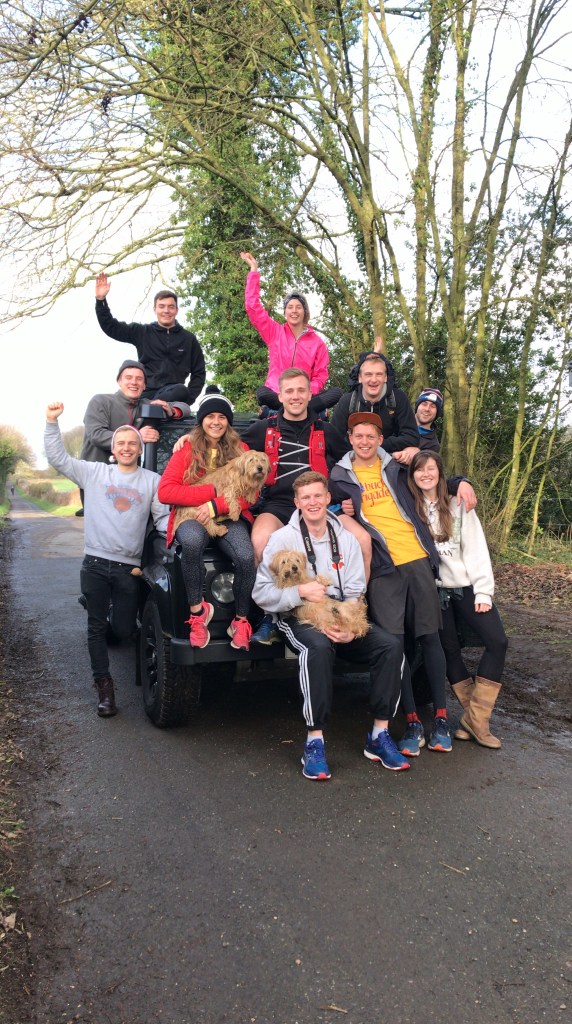
As we left the peaks of the UK behind, Solstice I turned from vision to memory. October came, the days got shorter, the darkness rolled in, people retreated indoors.
But darkness also held excitement.
With dark came sparks of creativity in Solsticians dreaming of a moonlit adventure as they trundled home on commuter trains.
Conversations were had and invitations posted. It was on.
The Plan
The target was the South Downs Way. An 8000-year-old chalky path usually the preserve of those seeking a relaxing walk to take in the sun-drenched views from the ridge over the surrounding countryside.
Not tonight.
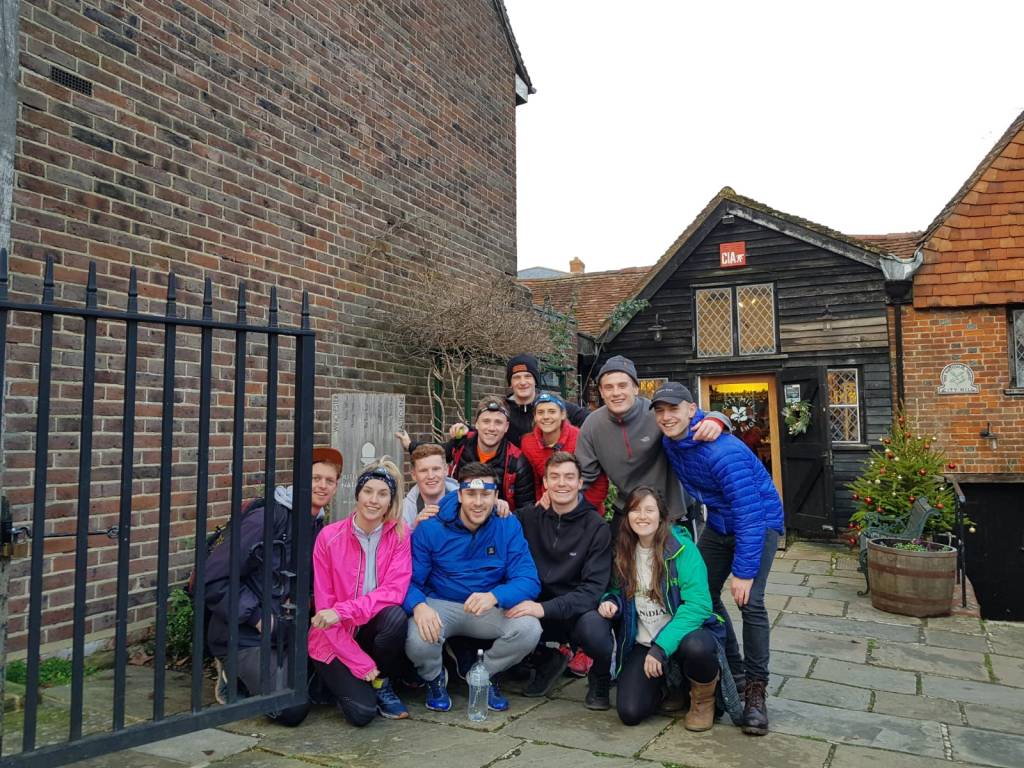
Headtorches on, 4 days before Christmas, we’d start in Winchester only once sun had set (15:53). The longest night of the year gave us 16 hours of darkness to run the 161km route between Winchester and Eastbourne, relaying in twos and threes as the rest of the team drove between the checkpoints.
A relay challenge on this scale required expansion of Club Solstice and so new members were drafted in. Standing strong as 12 we converged on Winchester with the ever-willing Lou (Miles’ Mum/Club Solstice super fan) on-call if (when) required. Having spent the preceding weeks raiding family and friends of the stock required to complete the challenge, and with a fleet of cars readied with sandwiches, soup, blankets and long-distance radios, we were good to go.
The Challenge
8 segments of 15-20km each, 2 segments per runner, with a final scramble along the coast to Eastbourne pier en masse.
With only the beam of a head torch to guide us, logistics and timing would be key.
The Attack
Leg 1, Winchester to Exton (22km).
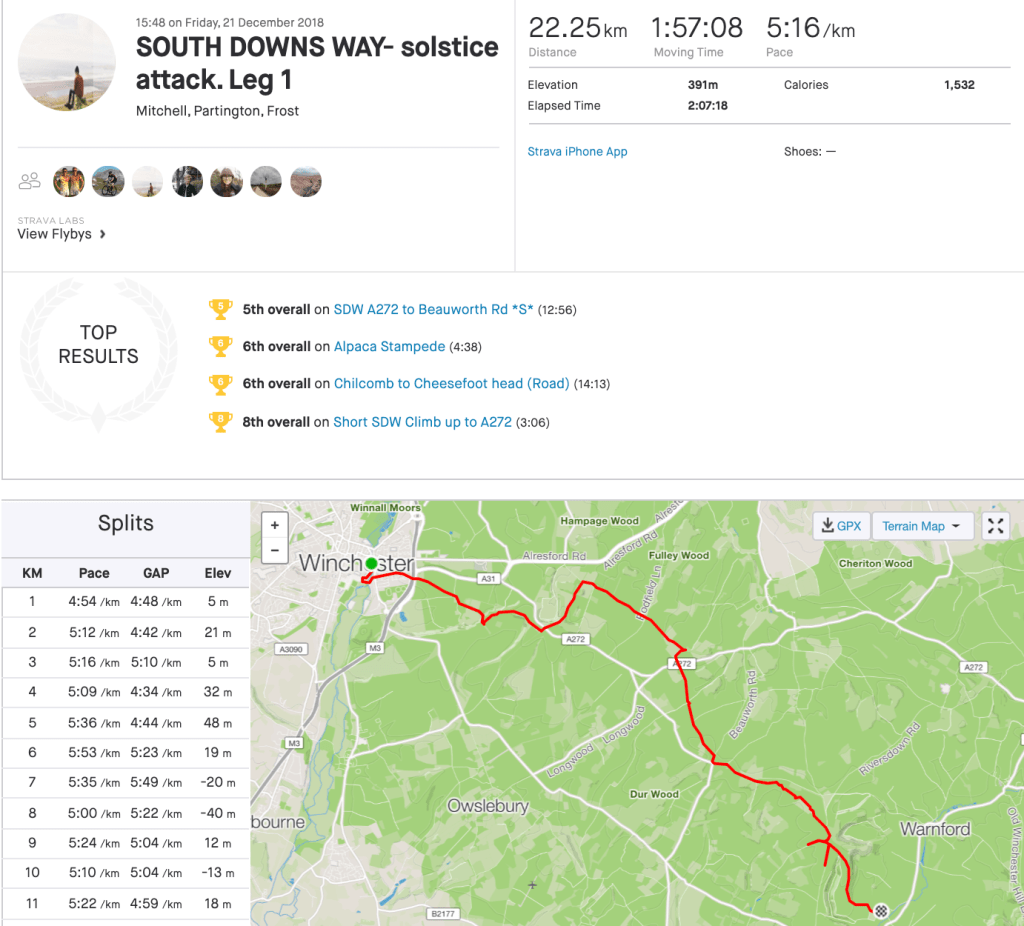
Holding back the traffic on Bridge Street, the first three runners left Winchester City Mill with the only day light we’d see until the rising sun on the coast 16 hours later. The rest of the team fired up the cars and set in motion what would become a familiar routine by morning; one car to the midpoint carrying water and food, the others to the checkpoint for the next runners to prepare.
The darkness rolled in, with a layer of thick cloud. 2 hours had passed, the team waiting nervously at the first checkpoint (a narrow farm track in Exton) for signs of life on the horizon, wondered if the concept of a Winter Solstice challenge had been a foolish one. The radio crackled into life, “2km out”. Strategy confirmed as viable, we jumped into life and the next runners stretching cold legs as flickering lights appeared on the horizon. The head torches were now bounding towards us, charging over farm styles and uneven terrain. Within 20 seconds the handover was done and the next three vanished into the night.
Leg 2, Exton to Butser Hill (18km).
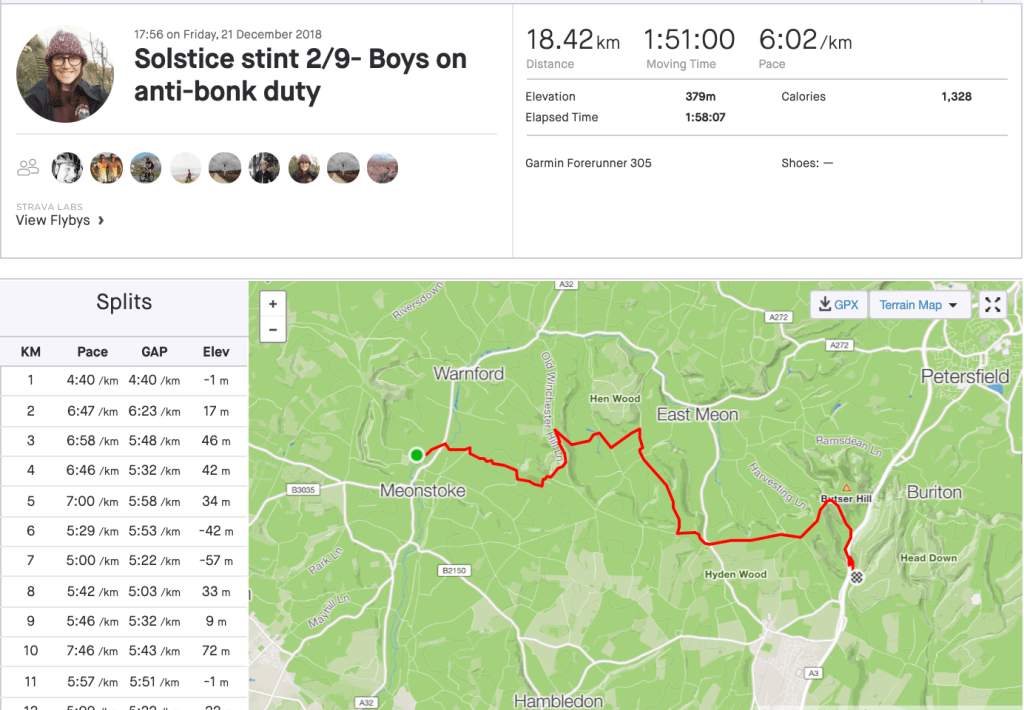
One car to the midpoint, everyone else to the checkpoint putting soup on the camp stoves to warm the incoming runners. The mood buoyant with anticipation of the night’s antics and Club Solstice once again making the most of the British countryside. Again, radio crackles, head torches on the horizon, clambering at the clasps of the relay running pack, refilling waters, off they go.
Leg 3, Butser Hill to Cocking Hill (20km).
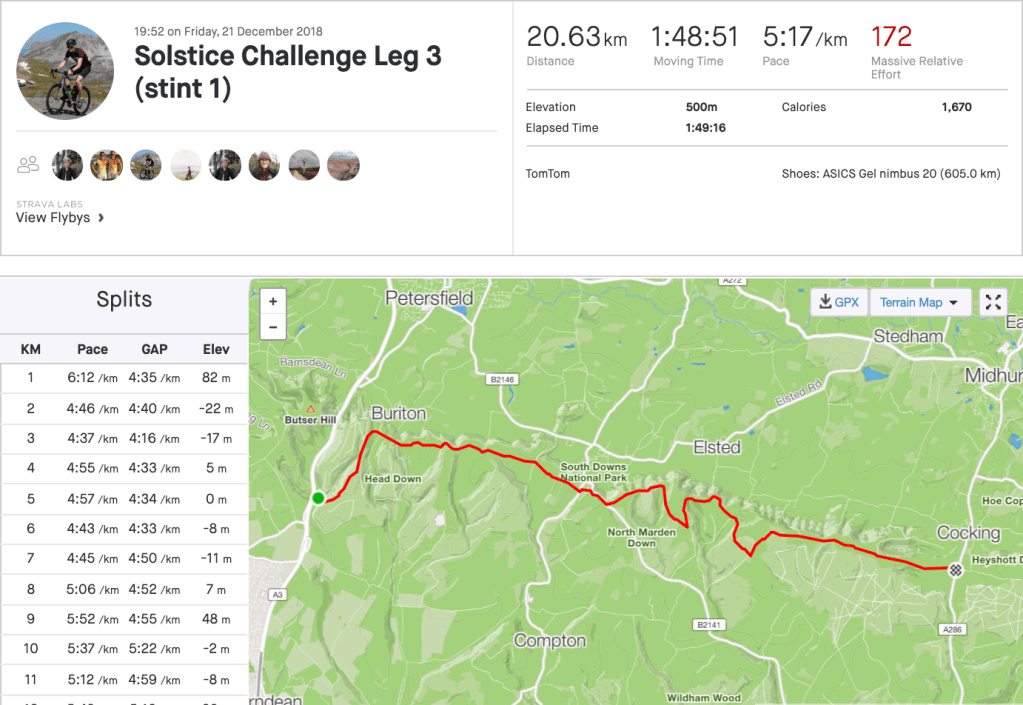
Three runners we knew could beat the clock on a good day, disappearing uphill at a frightening pace. Before we could catch a breath at the checkpoint, they’d made it through the midpoint well ahead of schedule. With a clear view of Cocking Hill from the end of the segment, there was no need for radios but to play music down and spur on the inbound runners. Lights soon appeared at the hill’s crest, followed by a 500m straight road sprint finish to the checkpoint. These goats had banked some valuable minutes as the next pair hit the chalk in trickling rain.
Leg 4, Cocking Hill to Amberley (19km).
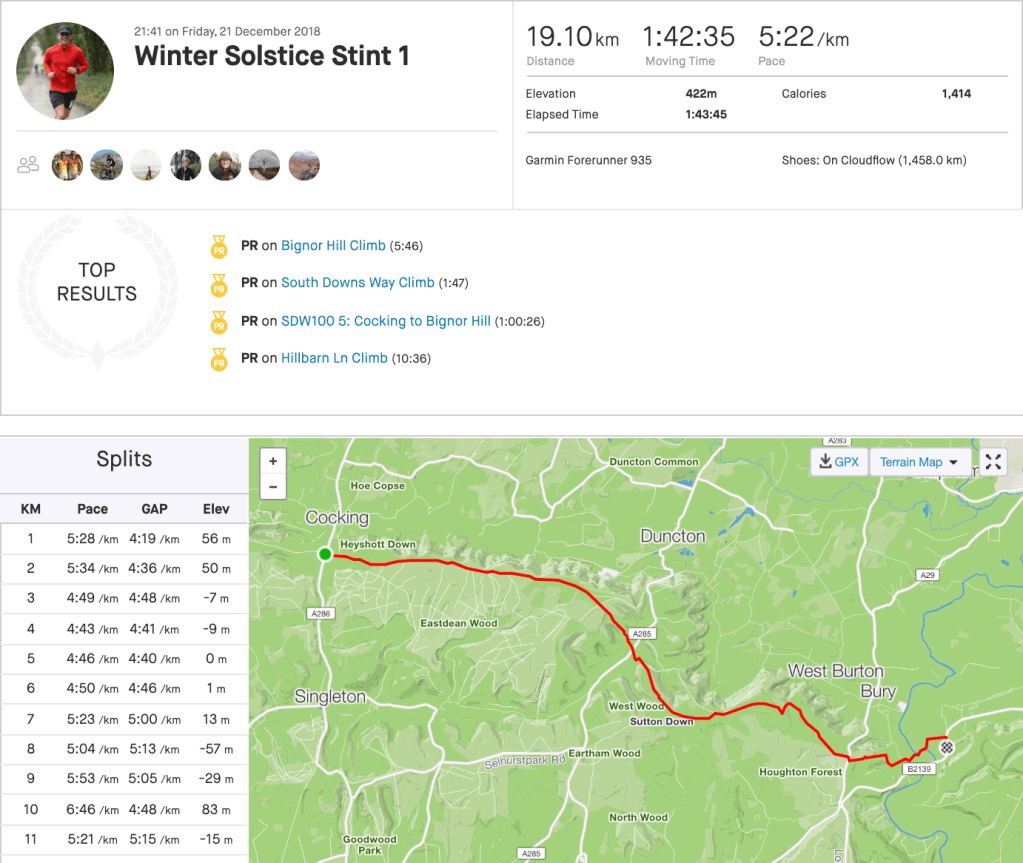
As the runners made their way, the humble Hyundai Getz – that had so loyally carried us through Solstice 1 – roared across the South Downs National Park towards Amberley…until it didn’t.
The Club were no strangers to a mechanical; in the dark lanes of the Lake District 6 months earlier a pothole had knocked out a front wheel and power steering. This time the Getz had already taken the direct route over a curb, taking an insignificant (yet worryingly large amount of) metal off the bottom of the car. Limping into Amberley, the car’s electrics then all but gave up. The bonnet was raised but of course no one had a clue what they were looking at. The most experienced mechanic (self-taught via YouTube) was one of the current runners out on the track.
The handover onto the next leg was an ominous affair as three more runners took off into the night, not entirely sure who’d be there to meet them in Steyning and which car they’d be in.
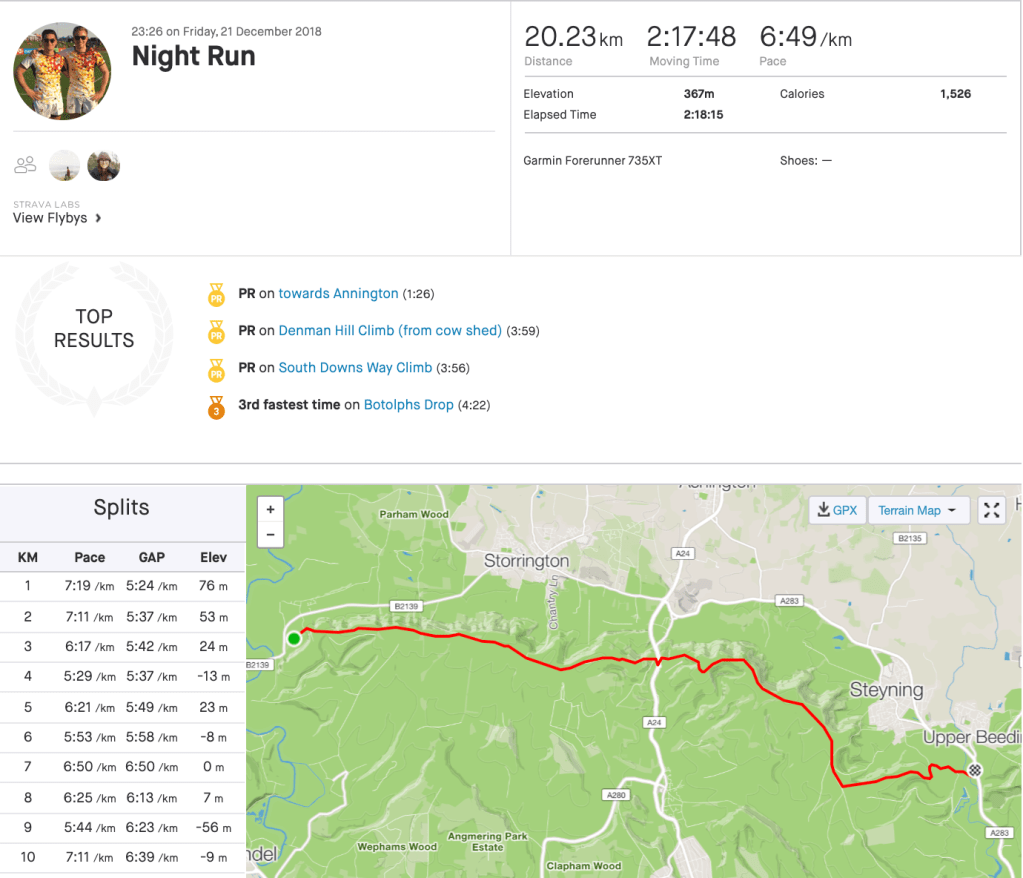
Leg 5, Amberley to Steyning (21km).
The rest of the team went on, leaving three behind with the Getz and some jump leads. 3 days before Christmas in the middle of the South Downs ruled out roadside recovery. Potential problems were identified and dismissed as more and more tools appeared from the toolkit. Still the Getz would not go.
It took eagle eyes and a moment of inspired mechanical flair to spot something sparking shoulder deep down into the engine, tighten an unknown bolt, and bring the car back from the claws of death. We were back on the road!
The Club reunited at a lay-by on the outskirts of Steyning in a jubilant mood. We were over the halfway mark, had defied a mechanical, and had cause to believe yet another challenge could be completed. Essence of Club Solstice was in the air as we sat around the camp stove with music, food, and an ear tuned to the radio. The runners had belied the drama going on around them as they’d set off and came in strong right on cue. The now familiar handover routine occurred and the next team set off to Ditchling Beacon.
Leg 6, Steyning to Ditchling Beacon (17km) and Leg 7, Ditchling Beacon to Southease Station – (20km).
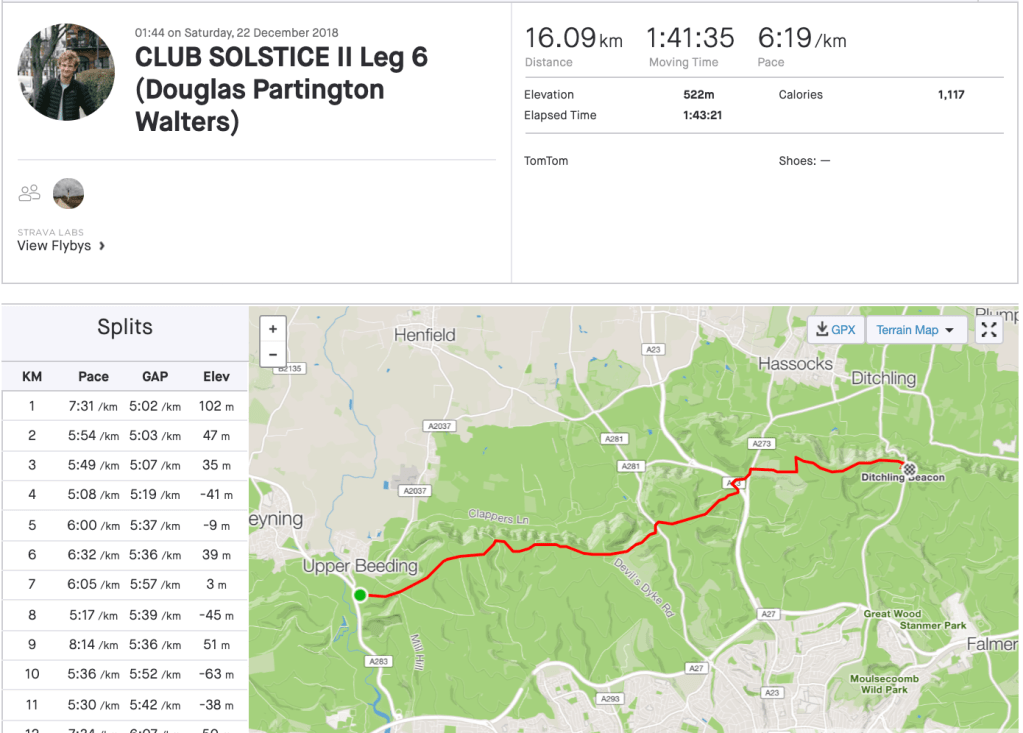
Running through the silent dark hills, we connected with nature and outdoors. This was the antidote to modern living and our obsession with how the ‘other’ lives. There were no comparisons to be drawn out here, no filters necessary, no likes to be gained. Just the moonlight and an 8000-year0old path well-trodden.
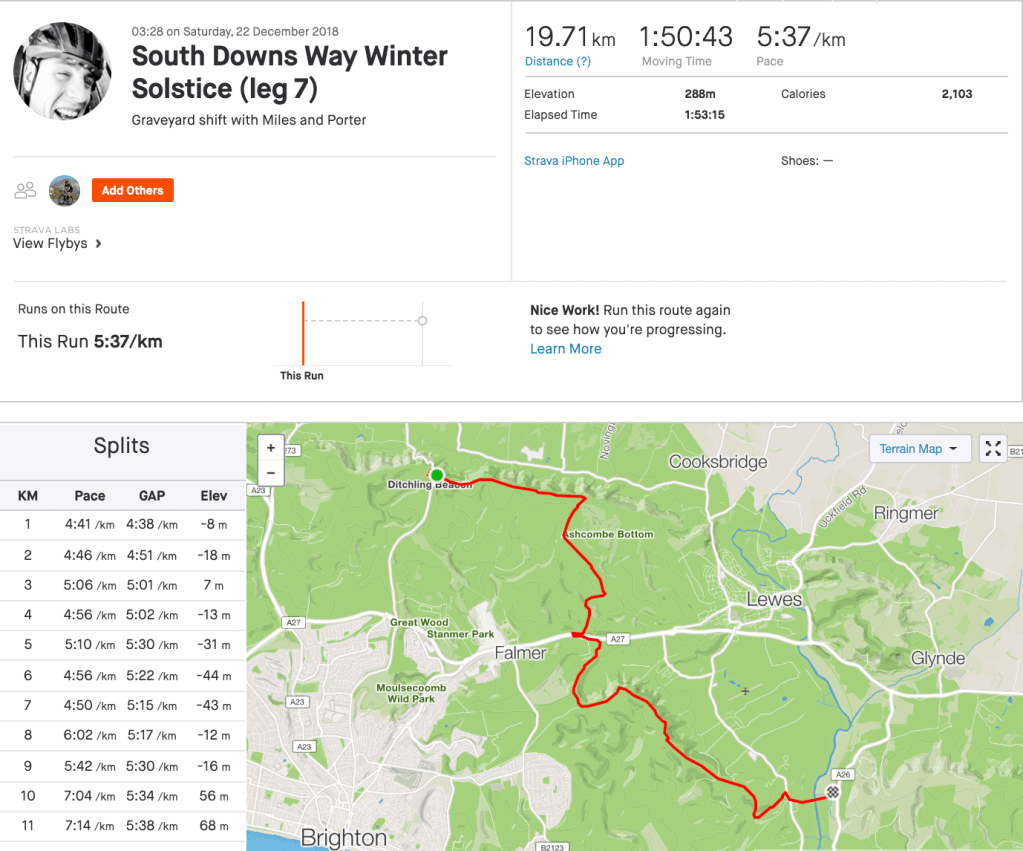
Now edging past 3am, clouds had given way to a clear starry sky and the cold that came with it. It soon became clear this challenge would be defined by getting through from this point to sunrise. Checkpoints became increasingly quiet as club members focussed on staying warm, eating and sleeping.
Leg 8; Southease Station to Birling Gap (24km).
The final stint before the team run into Eastbourne and the runners set off in good spirits when they reached the support car 10km in. The end was in sight – or so we thought.
Heavy rainfall in the preceding week had flooded the Cuckmere River and the wooden bridge and public footpath along the flood plains were now under 4 feet of water as far as the head torch could see. Quick thinking and a check of the map revealed a 2km detour that stayed above the water line. The runners met the rising sun as they broke onto the coastline for three long and lumpy kilometres. Headtorches off, approaching pure exhaustion, now was the time to dig deep.
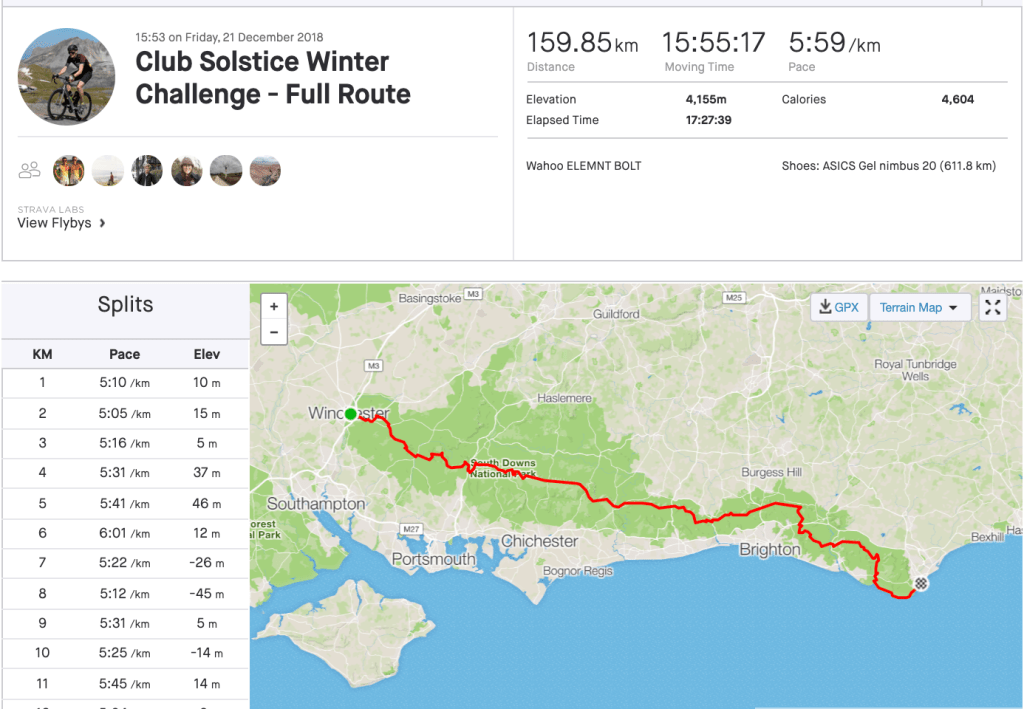
Leg 9; Birling Gap to Eastbourne Pier – 9km.
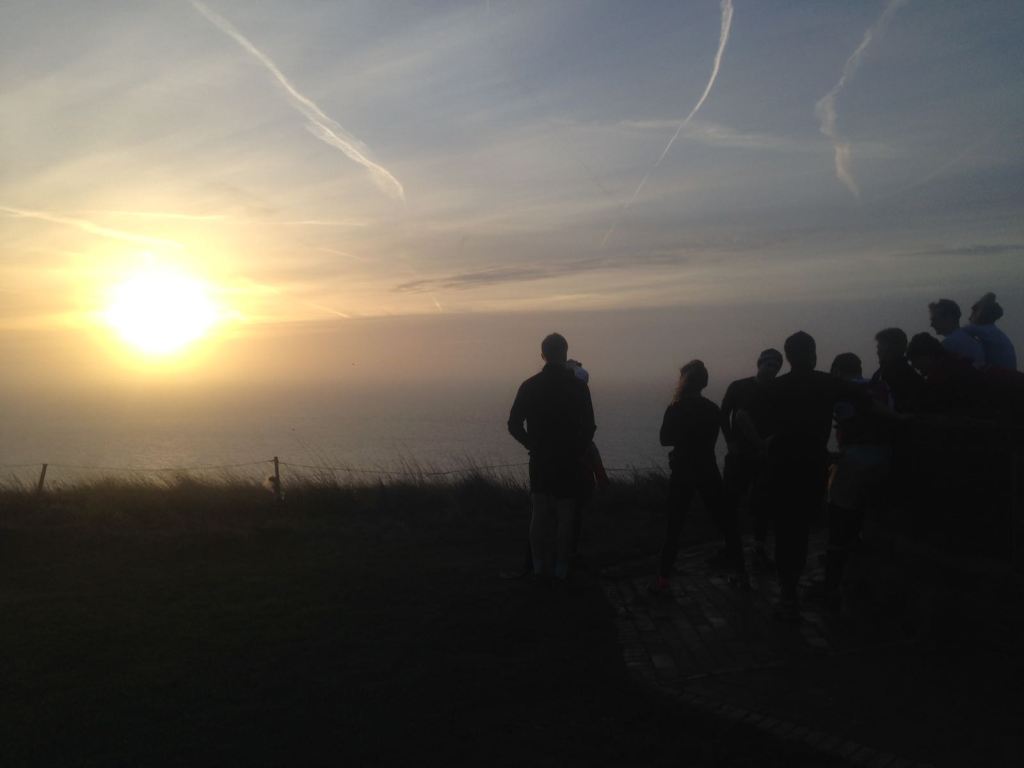
Since the challenge began we’d been working as a team, but for the first time now we ran as a team. We left the headtorches behind as the dawn sun lit the south coast, Eastbourne pier our destination visible in the distance. The grassy fields gave way to seaside town and beachfront promenade. Heavy legs creeped ever closer to the pier!
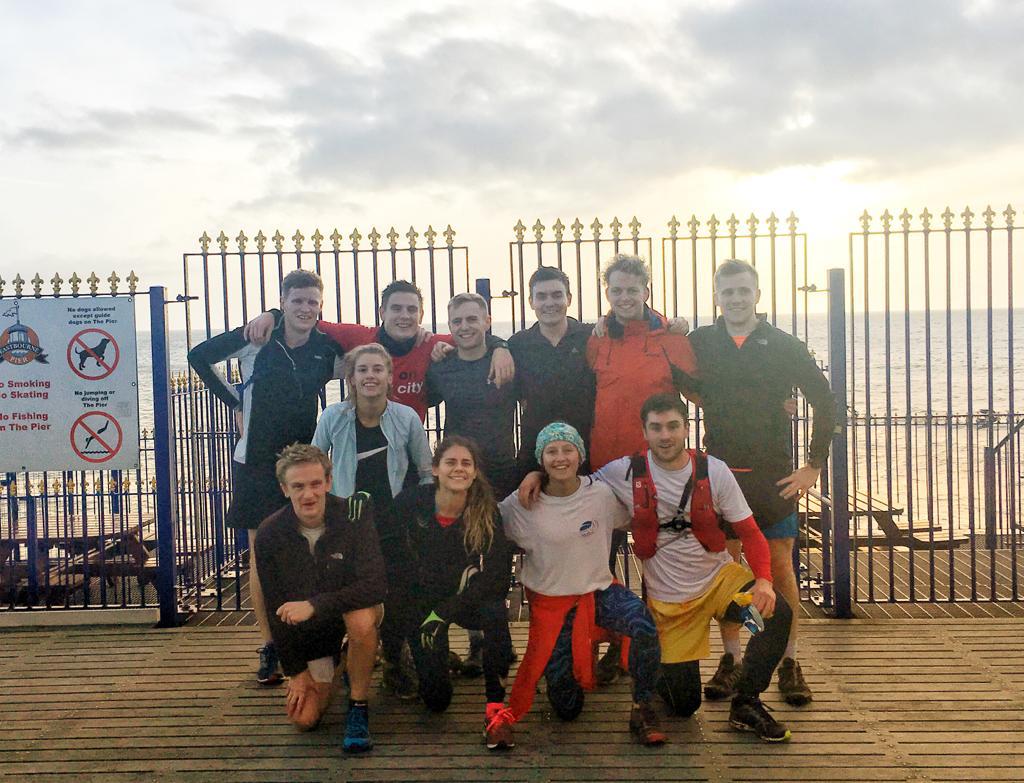
We turned onto Eastbourne pier and faced the sunrise across the expanse of sea before us, knowing the longest night was now behind us.
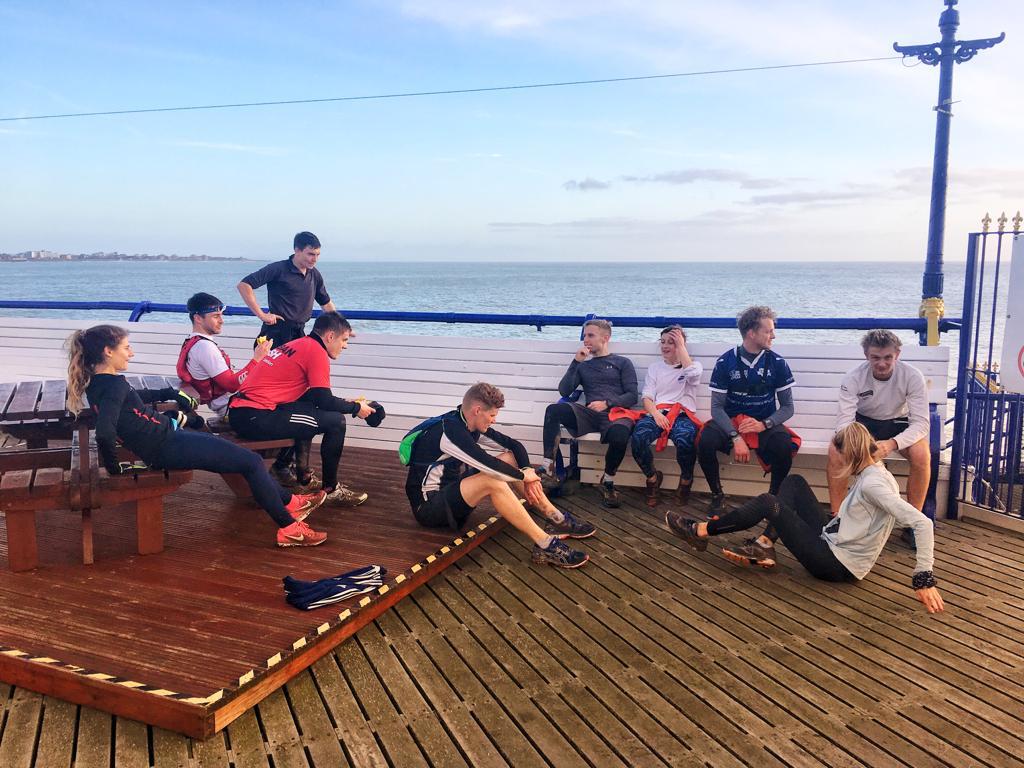
We’d done it in the dark mid-winter, here’s what we learned:
- The UK has an expansive array of national trails and routes, the majority of which are well signposted and preserved (our thanks go out to the volunteers that do this). Google and you’re likely to find one of these not far from your doorstep so get out and get to know the country around you!
- Winter doesn’t mean you’re stuck inside. Advances in outdoor gear mean that with a little investment, you can still safely explore the outdoors even on the UK’s colder and darker days. Still, stay safe, prepare thoroughly, and always make sure people ‘on the ground’ know where you are.
- For those more unique challenges that require a bit more planning, divide the job up and delegate tasks. Collective brainpower goes along way.
Written by Peter Usher

 clubsolstice.sport.blog